Saturday, January 14, 2012

Response to an overheard conversation

This post is the result of a conversation that I couldn't help but overhear during the break in the Wednesday lecture. I overheard someone saying how they would be put off playing some games because they would 'probably have to spend 5 hours reading a manual' which would explain how they actually play the game. I’ve played computer games since I was 4ish (end of the 80s) so I found this as a surprising statement, since I don’t recall even seeing a game guide (other than a control map) in several years, and tend to be able to pick up game controls almost instantaneously. I initially put this down to my long association with video games and having learnt one game you tend to know them all.

I now realise that this can also be a result of a conscious evolution of gaming interfaces by developers to maintain a consistent set of controls for their games. As we have learnt in discussions on immersion, it is important not to allow the interface to be a barrier to immersion, since any kind of disruption to play breaks immersion by bringing the players own physical reality back into frame, the controls need to be kept understandable or simple to serve as an extension of the person. Most game interfaces have appeared fairly natural to me, in part this is learned behaviour but also there is an evolution in the game play which gives opportunity to learn the interface whilst not drawing attention to your lack of interface knowledge.

Most contemporary games start out the game with an in-game tutorial which also serves as the opening act; the complexity of play is generally ramped up gradually as to keep the player engaged but not frustrated. The best sequence in recent memory that illustrates this is Fallout 3, where the game starts with your birth, and then as a toddler you are asked to walk around and pick up a ball, this is facilitated by on screen prompts saying “press W to move forward”. So the game has created a situation where you can be situationally immersed but simultaneously learning how your avatar is controlled, whilst not drawing attention to your lack of knowledge of the controls.


I think it's interesting how these changes have come about, especially the manner in which newer games drive the immersion by keeping the player engaged whilst teaching them how the game works. I do worry though whether this kind of consistent technological adaptation prevents the development of newer physical interfaces, whilst the console and handheld markets have shown huge changes in the last decade, this is yet to reach the PC market (in fact there's always the myth floating around that PC gaming is dead).

I also question whether the new interfaces (motion control, either using photodetection or a wireless device) actually offer the improvements that they claim. Many of the most interesting and radical uses of this technology are coming from hackers rather than the developers themselves, see below, adaption of Xbox Kinect to play Elder Scrolls V: Skyrim.


I may have to return to edit this as it is 1am and I have work in 4 hours. :)

Minecraft and Agency

In the lecture on Friday when Steven Poole was mentioned. I couldn't help but think of Minecraft as the game which contradicts his point about the agency that videogames provide are just an illusion. This is evident upon playing the first five minutes of the game as Minecraft has almost no limitations.
If you haven't played Minecraft its a sandbox building game or survival game depending on the mode you choose. You play in the first person perspective but what sets it apart from almost every other game is that the whole world is made out of blocks like lego and these can all be manipulated. Because each level is randomly generated whenever you play the only limitations this game is set by is the physics and the properties of each block. Many players of this game make structures that noone could imagine possible and I don't think the creators could influence the players' agency as Steven Poole would have us believe. Of course this prevents the game from having a storyline but it displays a game where agency is definitely not an illusion.

Jacob Hui

old games vs new games

So I was feeling a bit bored last night and thought why don't I get the old PS1 out for some old school fun! I really felt like playing some Jonah Lomu rugby (1995). After about an hour of game play , it felt like I have relived the rugby world cup all over again, thats how intense it was!

I began to think about what was discussed in the lecture and tutorials about 'diegetic' and 'situated' immersion. Playing Jonah Lomu rugby , I was most certainly absorbed into the text and forgot everything exterior to the text. It made me realize that diegetic and situated immersion can still occur just as much whilst playing old school games than it does when playing the latest and greatest graphic designed games. for me , it was just the simple game play that attracted me into the game and this was more enjoyable to play than the rugby challenge on PS3 that contains 10 times better graphics than Jonah. I was fully immersed into the text and it just reminded me of the good old days playing Jonah Lomu with all my mates.

pLease reply whether u reckon old games are still the best ,compared to the latest and greatest console games.

Brendon .S

Story telling in Games

Ever since the beginning of known history (maybe before?) stories have been an important part of culture. They have been used in bonding, in learning, to tell history, in determining political and social actions, as well as of course for entertainment.

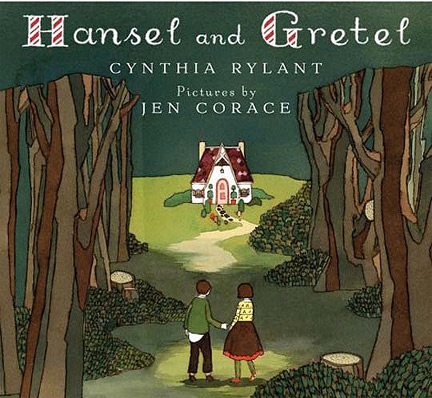
Wilderness survival book: What not to do.


Traditionally these stories would be told orally, just as they were when you were little, but as media got more advanced the stories followed. From oral tellings, to songs, drawings, written, print, coin-operated peek shows, radio, silent films, talkies, TV, internet and finally, games.

You may be thinking: 'Hold on, those things just give information, not stories.' But almost everything is a story, from the news in newspapers or on TV's to blogs on the internet. For example: a recipe on a website is a story of how someone made a yummy cake, you can learn from this story and make the same cake they did.

So how does this fit in with games? Well in three ways. For one; a game can allow you to experience a story and the messages encoded within it (Such as, The Legend of Zelda). Two; a game can be an open space for you to play with concepts of your reality or in other words create a story of your own (Knights of the Old Republic or Minecraft). Three; a game can allow you to both tell and experience a story through interacting with others (World of Warcraft online play).

This is a bit contradictory to the agency we have been told is important in games, because in most cases we do not actually have any ability to change a story being told to us.  Yet, situated immersion might actually make a stronger case if it was viewed as the ability to put yourself in a story, rather than your ability to interact with it. Especially seeing how stories have had such an impact on development through life. Plus - people like stories, because we have grown up with them and not only personally, but culturally and as a species. Listening and telling stories is in our blood.

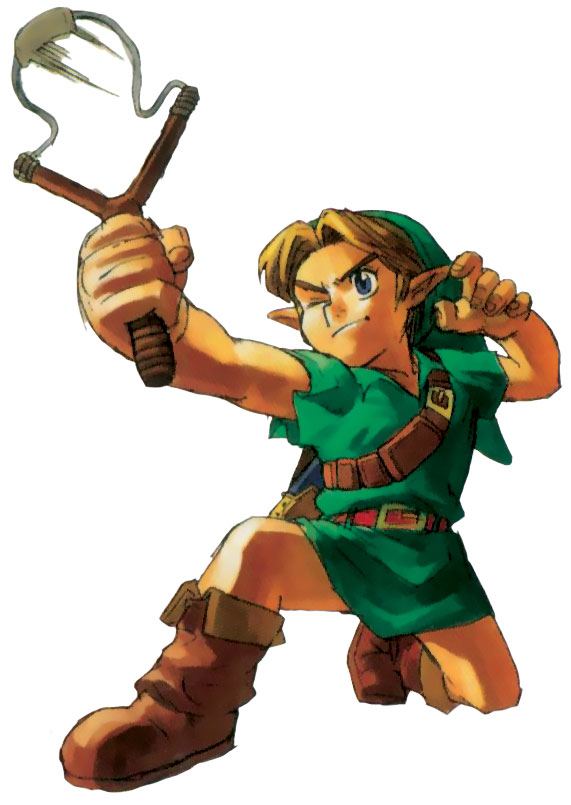
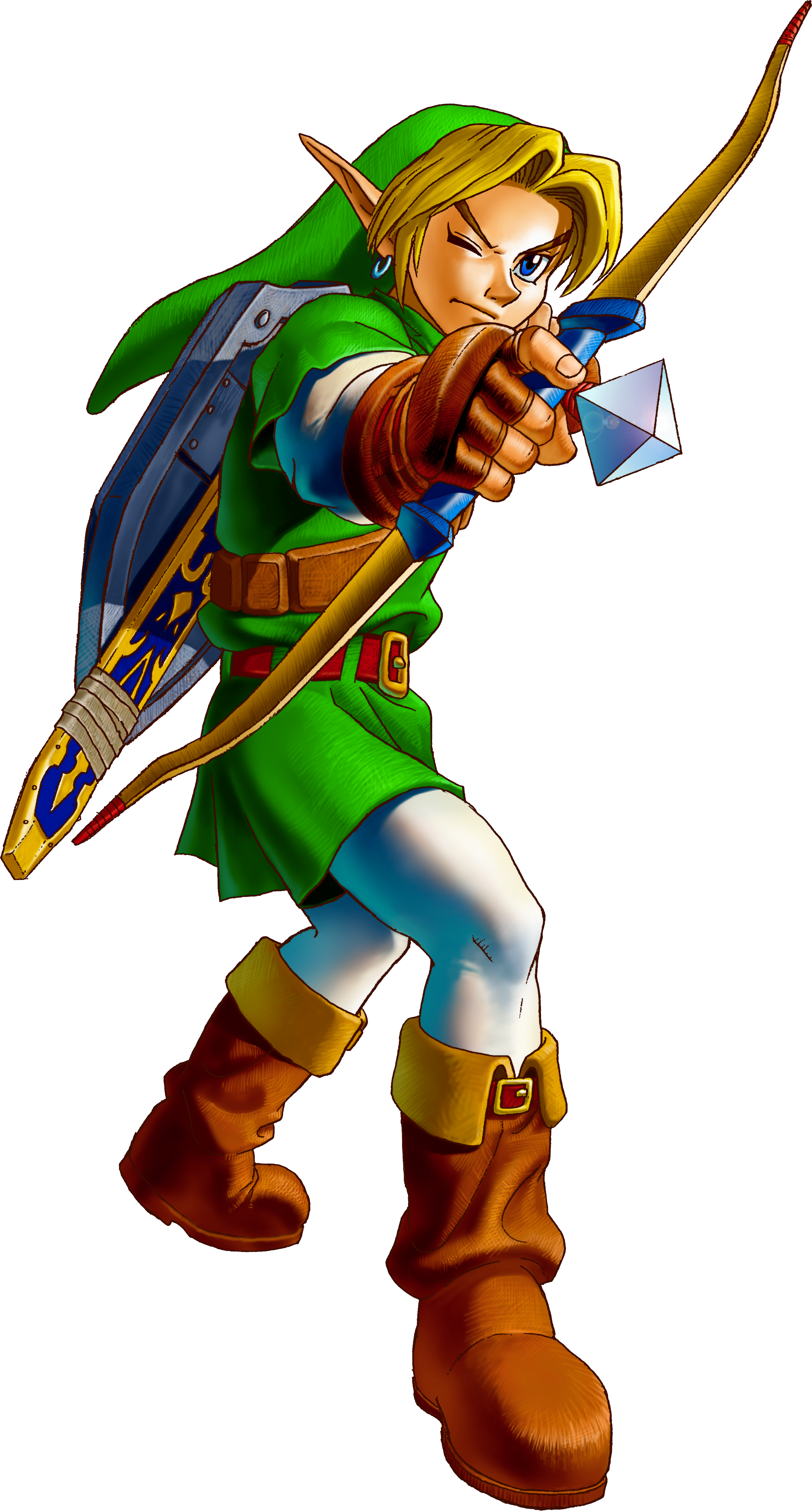
With this it makes sense for kids to really like stories, it is how we learn as a child and become an adult. Both through hearing about the world through stories like "Don't touch the electrical socket or you will get a nasty shock" (Short story but good message), or learning about morals, relationships and development through Gimm's fairy tales (E.g. Jack and the Bean stalk being about male sexual development). If I link this back to gaming though, a pre-set story teaches you how to live or maybe an important moral . Such as, the moral of Portal: there are many different ways you can approach a problem and 'if at first you don't succeed, try and try again'. Or a possible interpretation of meaning in The Legend of Zelda Ocarina of Time - Children are not immune from problems and trouble, challenging kids is healthy and rewarding, and finally some problems are best kept out of the reach of children and fixed by adults (e.g. Child link had a slingshot, a weapon of mischief, Adult link has a bow, weapon of war and responsibility).


Then there is creation of story: writing stories, drawing pictures etc. Next time a kid draws a picture, ask them for the story behind it, you might be impressed. The adult version of this being through the process of creation, allowing a person to play with the concepts of reality internally, with the end result being a story reflecting their 'play' with these concepts. The game example being, if you are given freedom over an environment with set rules, what would you do? Such as in Knights of the Old Republic, very simple choice - Good or bad? We are taught to be nice people and most people are, but when given a situation where a nice person has the option to be a total asshole just to play with the concept of doing so, what will the result be? Bastard of the Old Republic, shows us just that Massive Roleplaying Games (Of which you play single player) give us the option to play outside ourselves in broad ways. The personal decision to go against your gut instinct and be evil can be hard, and this difficulty creates the story of the nice guy who played nasty. This story will shape how you view personal actions in games and reality, plus the actions of anyone else who hears it. All this insight essentially through a story.

Finally, when you see kids playing some bizarre made up game, of which the rules are understood purely by them, it is a story based on both individual and shared experience, sort of a  joint story telling. Normally this would be called shared history, and serves to bond people together. Those kids will remember they played this fun game that only they went through, just as a pilot in WW2 went through something that only other pilots in the same war would understand. Yet, this story is important if the event is significant enough for many people and creates a shared history between individuals, cultures and even societies, often going through further generations (which can be only a few years in virtual worlds with player turnovers) as myth and legend (But might be stretched a little bit...). The game version of this can be seen in MMORPG's like World of Warcraft, or simpler ones like  Cyber Nations or Urban Dead. Simply playing the game is enough to create a bond between some people, but add in some raiding in World of Warcraft, a war in Cyber Nations or a Zombie Horde attacking a mall in Urban Dead or an alliance in any of these and the shared history increases, thus the bond strengthens.

Of course there is also the whole one up aspect of having a history, for example: My best score in Battlefield 2 online was 30 kills and no deaths... Bet that was higher than yours, meaning I am better. Or more likely, walking around in World of Warcraft with some very rare armor and being envied by other players.

To sum up: Agency (perceived or actual) in games might not be the most important part for immersion, rather three different types of stories which are present through our entire lives, but also pop up in games, cause us to immerse ourselves. Partly due to entertainment, but also through stories being how we learn and progress as human beings. Firstly, through stories of other people and places filling our heads with ideas (Linear story based gaming). Then, giving us a space to challenge our ideas and create different versions of ourselves and test them (Open ended, choice based games). Lastly, with constantly forming shared history in play and competition, setting ourselves with or against others we form our own stories which create ripples through time and space (even if it is only personal), but also give a feeling of worth in comparison with others (MMORPGs and Online gaming). 

Really games are just the listening to, creation of and interacting with stories... Maybe that is why they are so popular.

Immersion Gamers and the Makers

Hi, Rod here.
Just continuing on a question I put to Kevin and Mark on Friday. Surely the Makers of the games are very interested in immersion and how to achieve it on a continuing basis. By this I mean of course that the Makers must constantly "up their game" to match the highly evolving skills, wants, desires, (should I say it) needs of the Gamers. After all, the more the engagement with the game on more detailed and complex levels, makes for a more quasi-real experience for the player.
I argue that Makers must be researching and trialing new ideas to an exorbitantly high level in order to create the ultimate level of immersion possible at the time before a new game is released-why? Because it will bring more Gamers to buy the game, pure and simple.
I would also argue that the game may not necessarily be a vortex of complex levels with multiple players and a matching matrix of options in order to achieve immersion in a Gamer (albeit be on the dieagetic or situated level) . Donkey Kong with its limited conventions more than proved itself in 'hooking' the Gamer to stay in the game for long periods.
If I am right on this point, I am guessing that the Makers are extremely interested in ideals like Agency, Structural incoherence, Gaming literacy, obviously Emergent behavior, the Uncanny valley theory, and pretty much all of the other ideals, theories and terms we have talked about since the beginning of the course.
To quote further terms; Digital Natives and Immigrants must also be covered if you wish to cater to a wider market, and I think that the Wii does a wonderful job of bringing a more physical component to the games so that even newbies without much experience in the gaming world can bring learned actions essentially foreign to the gaming world and have a agency level with the game that some experienced Gamers used to conventional controllers may not.
I am not sure if what I am saying here has the relevance to the course that I think it does, but this is the slant I want to look at for my own assignment. If anyone has any comments it would be appreciated. See you in class.

Refining Immersion

Game developers are continuously coming up with new ways to increase the immersion of a game experience. One of the biggest barriers to an experience being truly immersive is the interface that converts physical movement into digital signals; the controller.

Most recently this endeavour for an immersive experience has led to the development of motion control technology such as Kinect for the Xbox 360 and Move for the Playstation 3. These interfaces, in my opinion, are only mildly successful in creating a more immersive environment, and the degree to which a game is immersive is very much genre specific. Dance games such as Dance Central and Just Dance are able to provide an accurate mapping of physical movement to the game environment because the nature of the movement, that it is intuitive and simple. However, games that require more complex functionality, which in turn require more complex controls, are harder to make motion controlled. When these games, specifically the first person genre, are given motion controls, the feel unnatural and clunky due to gamers being used to controlling with only their fingers. In addition to this, the motions registered to certain key actions such as reload or scope, are usually not natural or intuitive since the technology would not be able to pick up a more natural movement or simply the player would not know what this movement is.
This video demonstrating the gameplay of a Kinect version of Tom Clancy’s Ghost Recon: Future Soldier at E3 shows how unnatural playing that game looks.


What I think is more of a step in the right direction, while not entirely practical for the home market at least, is technology development such as this. Where, not only the movement, but also the sight of the player is directly mapped onto a character in game, allowing for a more realistic experience.

The power of immersion


The American Medical Association's 2007 study show that 5 million kids (8-18) are video game addicts with 40% of them being female.

Such a level of addiction to something that is not a substance is unpreceeded in human history and shows how developed modern video games are. Janet Murray describes immersion as a metaphorical term derived from the physical experience of being submerged in water. With immersion it is the mind that is submerged in the visual and auditive impressions of a virtual reality.

First person shooters let the player see the digital world through the eyes of his or her avatar and visible hands as well as camera movement during walking contribute to that illusion. The genre has come a long way since Wolfenstein and Quake. Nowadays multi-million dollar productions like Call of Duty: Modern Warfare 3 use detailed graphics, realistic sound effects and a dramatic storyline to create a dense atmosphere that drags the player into its parallel world.

It doesn't have to be the first person perspective though. The isometric view of Starcraft was effective enough to lure a South Korean into playing till his death in 2005. Blizzard's World of Warcraft generates an estimated yearly revenue of USD 1 billion, demonstrating the effectiveness of the third person view.

These games all use monitors and speakers to bridge the gap between player and virtual world. Other games take it one step farther and use haptic technology to provide feedback that the player can actually feel. An example would be a racing game controlled with a steering wheel that shakes when the player hits an obstacle with his digital vehicle.

What will be the next steps in creating more and more persuasive video games? Graphic effects are approaching photo-realism, yet they always need a device to be displayed on. The 2001 movie Avalon portraits a world where players enter a game by directly linking their brains with the virtual world, thus eliminating the need for monitors, speakers and controllers. Similar concepts, although not related to games, are displayed in 'Strange Days' (1995), 'The Thirteenth Floor' (1999), 'The Matrix' (1999) and most recently 'Inception'.

The question of whether that technology will ever exist aside, what consequences would such a level of immersion have? Would people happily say their worldly existence goodbye for a life among wizards and elves? What would it mean if there is no monitor that you can look away from to tell you are in the real world?

Can immersion in games exist the same way in films?

After reading 03, I knew that immersion can be divided into two forms. They may coexist in gameplaying, but can they coexist during film watching? For me, probably not.

By applying Taylor’s understanding of immersion into films, I think that diegetic immersion can be interpreted as the situation where spectators lost themselves into the film story, and intra-diegetic or situated immersion happens when the viewers are immersed into the overall film making. Before I study film as my major, I always found myself emotionally lost into the film, feeling how the protagonist feels. It’s like I were the character in the film and experienced the same life with them. I think it is what Taylor called diegetic immersion. Sometimes it took me hours or days to recover from the negative emotions resulted from watching tragic films. And I thought this diegetic immersion alone would be enough to study films. But I was wrong after discovering that apart from this, the situated immersion is also essential during film study. Not only need to have the emotional connection with the roles, I also need to focus more on the overall shooting techniques, such as the camera angle, the sound or the genre, etc. Then it turns out that when I put myself into this situated immersion, I tend to ingore the emotional line and the details revealed by the character. As a result, I do not know how story develops or why it ends in a certain way. Most of the time, I try to focus on both immersions, but can only acheieve 50% of each. Then watching film became a task as I could not be totally immersed on either side. I wonder if I am the only person feel like this?

However, as for games, it is easier for me to achieve both immersions. Like when I am playing Plants vs. Zombies, I will focus on both putting more plants on the ground to destroy zombies and making quick decision on which plants to choose, paying attention to the overall situation. And this decision is made by the different spatial space, such as when I need to fight zombies on the roof, I would choose the special emitter, as the missile will not hit the zombies since the roof is curved.

So for me, the two forms of immersion which can coexist while playing games can not coexist when watching film…Or do I still need more time to train myself to be both emotionally involved as well as pay attention to the techniques of film-making while watching films.

Xu Can

The Advantages Of Having A Video games in my Culture"

Having a PSP makes you feel like you are the man,as a young lady I stand by my games that I love. But when guys see me with a PSP they asked do you play God of War??Gran Theft Auto?? and I say No I don't. Believe it or not I like to play Little Big Planet, Harry Potter LEGO and Ratchet (size does matter) that I have just started to play. I know it sounds childish but you know I get bored on the bus and I always come to uni when their is many children in the bus, so I like to play my kiddie games and show them that I am some pussy. Well I am getting a bit off topic now but going back to the "The Advantages Of Having Video games in my Culture", I am Samoan and I do not consider myself as a gamer but I was brought up with a family, with a brother who was in love with Super Sonic SEGA games and he will only let my sister and I play for 10minutes out of 10 hours of the day he plays alone. But it was funny as soon as my dad gets home my brother will quickly hide the SEGA and my dad will know because he goes straight to the cupboard and feel the SEGA console and asked "why is it warm?". There is also something I can remember when we went to Dick Smith and brought the SEGA that my brother was crying for it and my dad brought it straight away,but when I cried for a Barbie doll it took my dad one week to decide if he can buy it. At home my dad and my brother will be playing with it 24/7 during the weekends. One day I asked my uncle why he loves playing PlayStation after work and he said" it keeps him away from stress and for wanting to punch someone in the face"-he notes he likes to play Mortal Kombat. He also says some good points that I never thought of, "why go smash someone when in a PS3 you can you can do it without committing real a crime. Of course, in video gaming we have dreamers like my uncle who believes that playing video games is a stress relief, you rather be on the safe side and spend over $600 on a PS3 with games than paying a fine in real life. Being brought up in the Samoan culture it is not good to encourage your children to play video games but go clean the house,clean outside and go read the Bible is what we are suppose to be doing in our leisure time but my dad believed that "if you teach your children to fish,they will have something to do in their spare time,than going out and hanging out in the streets and becoming violent and scaring the crap out of the community," for him it was buy my children a SEGA and games stay home and use up the power, so we were safe. We lived in Ranui and it was kind of dangerous and now we are almost educated and we learnt that this was the only way that my father will get us to stay home. We were not well off but my dad would rather spend money on our SEGA and keeping my brother especially away from gangsters in the neighbourhood. But you know it is totally up to the buyer,if they could afford it. You wouldn't want to have a SEGA in 2000,i think it died in 1996?, but just to let you know that we still have our SEGA stored in my garage BUT it does not work (of course) every time I touch it, it reminds me of my childhood,when my brother will beat me in every game who is seven years older than me. To finish off..if this is an idea that will help our children to be safe and kept away from trouble then why not.

To find out why I can’t play a video game?(1)


These days, because of learning this paper I recall the fate that I experience with video games from child to adult. So I want to simply summarize it in this post. Firstly, I need to state that I do not like playing video games very much, the amount of the video games I engaged are probably less than ten. Then I am going to talk about the video game experience I have and analyze the reasons for this particular experience.

Although the development of video games in China is a little slower than Western countries, in Beijing’s shopping mall it is very easy to find the video game section when I was a child. However the memories of these are lacked in my head. If I look back from today I find some possible reasons for this situation. First of all, no one in my family play video games and I was influenced by family environment very much. Secondly, the price of video games is not very cheap at that time, and the economic condition of my family is not very good, so my parents were unable to buy me any games to play. Thirdly, because I am a girl and in people’s notion that girls should play dolls or soft toys, so parents did not want me to play video games which are about killing and shooting. Therefore my impression of video games is killing and shooting as well. Until today, this paper helps me to find out that some games in fact have incredible high artistic quality. Killing, shooting and playing are definitely not the key point in these games. In general, my parents did not worry about the negative effect of video games in my childhood.

Later, about ten years ago, computer started to be popularized in China. In my fourth year at primary school, my school offered computer science class. In class we learned how to operate a computer so the games I first met are Mine Sweeper and Card games which are self-contained in Windows 2000 system. Due to the Windows provided the introduction and guide of these two games so I found that playing them was easy and fun. But maybe in gamers’ eyes these two simple PC console game cannot count into real video games. I remember that I played Mine Sweeper and Card only in the computer class. And about the PSP that was popular at school in that period, I only saw someone play it, but I did not play it. Actually I never touch any handheld game console until now. Maybe because I do not have any interests on video games, I do not even have the curiosity to borrow and try it.

TBC....


PURELY PERSONAL EXPERIENCE AND VIEWS. NO OFFENCE.

THANKS.

JIWEI LI

Friday, January 13, 2012

Memory Lane

Todays lecture about agency and consequence reminded of when I was a kid and I used to sit and play the Spiderman video game on playstation with my godbrother. He would sit there, playing first (because he always had to be first) and then I'd see him get really frustrated and then I'd start laughing at him only to have the controller thrown at me and told "you do it then!" So there I would be sitting, casually starting off quite peacefully, only to have the stupid map blinking at me telling me there was someone in danger. So I follow the map and find myself blocked at a deadend and realise it was a trap. Then he would be the one to laugh at me when I finally realised I was cornered and didn't have enough room to maneuver so I'd end up getting beaten to a pulp, no matter what combination I used.

The discussion about consequence made me think of those times. If I hadn't followed the map and continued with the original quest in the first place, would I have died so brutishly when my time came to an end? Makes me mad I didn't know this back then, well not really, but you get my point.

Jenni M.

Just walked in Botany and saw this and it reminded me of this course :) Video games are everywhere!

First time im using this blogger application on me phone so it may not even post...


An example of griefing

Griefing was mentioned in the lecture today, but sometimes its hard to describe. This video shows a group of people griefing in Team Fortress 2


As you can see, some coordination of people on both teams is required. You can also see that it can be funny, provided you aren't on the receiving end

Evolution of the online gaming world

What I find of particular interest in video games and in there development over the past thirty years is the transition that has taken place between single player modes (typically known as campaign) and the new precedence that has been set for functional online gaming. Examples are easily wrought out through games such as warcraft, command and conquer and what is perhaps the pioneering multiplayer game counter strike. Yet all of these have an element in common, they were computer based and were made almost purely for computer gaming. This is a trend that has continued into the more modern games such as call of duty, halo, fifa and the list is endless, the void that once seperated computers and the gaming console have now been filled. Both are equipped with the ability to play others online and the distinction between the two is becoming more and more blurred. As a result of the huge increase in online play entire sub cultures have emerged, not only with regards to gaming as a whole but people who follow one particular game and form groups and forums around solely that game. Some might argue that this is the only socializing that allot of these people do, does this have an adverse affect on the manner in which allot of the younger generation socialize in more personal circumstances? I realize this may sound extreme and irrelevant but the sociology behind video games and the manner in which it affects society is not only profoundly interesting but also the most influential upon the way in which we live our lives. For fear of sounding like a broken record I will not mention the continuing debate surrounding games ensighting violence, yet this too relates heavily to the sociological elements at play behind the gaming world.

Are video games art?

An interesting point was raised in this morning’s tutorial about the purpose or incentive behind why people play video games. Do people play video games because they are fun? Sure, however some games are surely more mind-stimulatingly strategic than fun. Perhaps people play games for the social element, the ability to play MMOGs with real-life friends or a wider global community. The list goes on but obviously games are chosen to be played by people generally for a combination of these reasons because of the experience that they create.

In this same way, as less of a gamer myself and more of a “strategy-advice-giving-spectator” the more graphically advanced games which have arisen from the 21st century, I have noticed, certainly have a much higher aesthetically pleasing appeal to them. Technological developments and higher-definition capabilities certainly make games look very impressive and more realistic however; this is surely cannot be a valid way of evaluating games if all paintings (for example) are not evaluated based on how lifelike they look, yet are still considered “art”.

Instead I think it is important to look at how video games function as art rather than appear as art. Any work of art be it paintings, films, poetry, music etc contain a form of narrative which the viewer is invited to experience and work through. Similarly, many video games are structured around a form of narrative which players engage with and come to understand as the ‘map’ for the game. For example, even simple games such as Mario invite the player to become Mario and then save his girlfriend/princess. Other games integrate the narrative component more explicitly into the game for example in Max Payne the initial sequence sets Max up as having lost his wife and daughter to a gang of junkies in New York to which Max then transfers to the DEA and is employed for an undercover operation. Throughout the game the plot is driven forward by narrated insertions of comic-book-styled graphics which intensify the experience of being Max. Art utilise narrative in many different forms for this reason of further intensifying the engagement with the viewer (whether it be the player or people watching the game) to make the experience more fulfilling and for this reason, video games also use narratives.

An obvious element of art which cannot be ignored is the craftsmanship. For a painting the skill is obvious to detect, for video games the skill of the artist can most obviously be seen in the sophistication of the game’s aesthetic world and the attention to detail shown in textures etc. However, the craftsmanship of video games can be evaluated on a deeper level of how successfully the game is able to use the graphics of the game to immerse the player/viewer into the space. For someone who has the controller in their hand and playing the game, the immersion into the game’s world may be somewhat easier than for someone who is watching the game and has somewhat little agency to what they are watching. I personally find that are a game is more immersive as a spectator when there are details in the game’s world, often in the background or drifting along the edges of the screen. For example, when watching play The Getaway, in a driving sequence in the streets around Soho, despite the main protagonist driving around – in the background there was plenty of road rage on the streets with other insignificant characters tooting horns and pile-ups were created as an aftermath of my brother running a red light and these made the world of the game for me, all the more immersive. In this way, I think that the use of space, visually, by video game artists may also be a key element in evaluating whether a game is art or not.

On doing a quick Google search I understand that the notion of whether video games are art or not is still an actively debated topic, so for what it’s worth I think that some video games are art... some are so impressive that some kind of awards ceremony should be held.

- - Priya

Shadow of the Colossus: Simplicity in Storytelling

I have a confession: I love myself a powerful story in games I play. I love being taken aback by plot twists, I love connecting with the characters, and I love the immersion this brings. But most of all, I love the simple things in life. Like being moved by a tale which is so devoid of complexity and depth that a one paragraph-summary is good enough to cover the whole thing.

This brings me to Shadow of the Colossus, probably my favourite game. This is the story: Wander’s fiancee is dead and he has taken her to the end of the world on horseback to resurrect her. When arriving, he agrees to help releasing an evil god by defeating 16 massive colossi with nothing but a stolen sword. No context is given; there is only Wander, an immense, empty wasteland and the giants. The game is one of the emptiest I’ve played.

Simple as it is, there is something beautiful about the way SotC is presented. The lack of standard storytelling makes the game so mysterious and wonderful in its own unique way. What is the relationship between Wander and his fiancee? Why is she dead? Why is he willing to unleash an evil spirit just to save her? And finally, is it morally right to kill the colossi? These questions keep boggling me as I realize the giants I’m killing seem quite peaceful. They wander aimlessly around and are not threatening until I approach them with my sword. And as each of them is slain, Wander slowly becomes more sick while the god turns stronger. Is resurrecting a loved one worth the suffering both the protagonist and his enemies undergo?

The game never asks these questions directly, yet I can’t help thinking about them. That’s the beauty of SotC: The empty narrative leaves a gap which players start filling with their own thoughts and ideas. Of course, I like complex stories too. But SotC immerses me on a whole different scale. It’s a kind of storytelling only matched by its prequel, Ico. Which was made by the same developers. Man, these guys are good.

Lars Hermans

Ahhh Games!

Games. We’ve all played them whether we like to admit it or not. In my last post I discussed the issue of stereotypes that are associated with gamers- these stereotypes in my opinion may cause gamers to be ‘’closet gamers’-people who don’t want to admit they play games. I don’t in any way consider myself a gamer, however I do indulge in the odd game with friends on PlayStation, xbox and even the ever so old fashioned, mega drive. Mega drive is my favorite as it is really the only one I can play games on as it has an easy controller and simple side scrolling screen games that allow me to know exactly whats going on rather than these games you play on xbox where you control the direction you move and your vision direction with two separate analog sticks. Not only can I not get the hang of this multi tasking but the controllers are also waaaay too big for my hands- we used those horrible bulky ones- so it was no surprise to me when I read that this very controller was awarded by the magazine Game Informer  the ‘blunder of the year’ award for being too bulky compared to other game console controllers in 2001. The other reason I prefer the older video games that are played on Mega Drive is because these xbox games I see my friends playing-like the series of Halo games- have too much going on for my limited game playing ability. I find myself getting frustrated just watching people play let alone when I’m holding the controller and in control. This situated immersion where players feel as if they are within the game space/environment or constructed image allows players-such as my Halo obsessed friends- to feel as if they are a part of the game. Some prefer this illusion of being inside the game/space where they are involved in the storytelling of the game, myself however will continue to stick to the games where i look at a space on screen rather than immerse myself within that space. I think I will stay away from this complex gaming -Bring on bejeweled :)
Rebecca J

Thursday, January 12, 2012

Game Exploits

During the lecture on immersion there was a clip of Team Fortress 2 with the physics exploits of the "Demolition Man" using his grenades to blow himself over to the other side of the map. This is an example of a gamer using the physics engine to manipulate game play, people who can commit these exploits call it a skill while others consider it cheating, since it gives other players an advantage.

But is this cheating or a skill? If the ability to do a skill is there, why not use it? If someone can aim or jump more precisely in the game better than you, is it cheating? although real cheats are Aimbot and NoClip, people have the potential to use those in games as well. Is a Game exploit only unfair if only one team can specifically use it? (e.g Flag defenders in CTF or a certain faction in an MMORPG) well, yes. it unbalances the game. no one wants to play a game that you have NO CHANCE at winning.

That's Multiplayer and online play, but what about single player?
no one cares if you use exploit to play thought a game, since it doesn't affect them. Most gamers play though a game normally, then usually try exploits afterwards, so they don't miss out on content, also because means of exploiting game design is difficult and would require you to have a tremendous amount of skill and timing to get right.
take these two videos for example of Speed Runs of Portal and Super Mario 64 for the Nintendo 64. people have beat a game in minutes as opposed to hours (my personal best on a Portal Speed Run was 40 minutes, this guy did it in 9 minutes) 

Portal speed run in 9 minutes http://www.youtube.com/watch?v=W1U5RUVENNE

Through memorization, precise timing and attention to detail, these speed runs are possible, small things like running backwards being faster than walking forward.
Is it cheating? Not really, based on these abilities, they have already beaten the game. This is playing the game in a different way, not exactly the way it is meant to be played, but having a similar result of actually beating the game.

So people exploit game design with glitches and level design, but there are some situations where game developers expect you to exploit the level design and find new content, like the Warp Zones in Super Mario Bros (NES). A lot of games Nowadays contain easter eggs with hidden content, some of this content you need to exploit the maps, like in the Halo series, you would have to stack vehicles or grenade jump in order to reach areas outside the map and grab this extra content.

I just think it;s smart for Gamer Developers to give bonus content to people who can go out of their way to find it.

It's like looking underneath your Chess pieces and finding diamonds!

Nicholas Boulton.

"Structural Incoherence" and Katamari Damacy

In our Wednesday lecture this week, Kevin mentioned Stephen Paul's complaint about the fact that most games have some kind of limit to it which ends up breaching immersion with space.

Well today, I was watchng my boyfriend play Katamari Damace where the point of the game (in story mode) is to make your ball thingy reach a certain size by the time limit by picking up EVERYTHING in the world from a small piece of cheese to a whole island! At first, I thought it was a bit ridiculous considering Paul's comment but I realized that the as the ball grows bigger, it is then capable of picking up larger objects.

So with that in mind, I realized that my boyfriend (and even I who wasn't playing) was fully immersed in the game because he was concentrating on trying to pick up as many objects/people as possible by the time limit.

Have a look at Katamari Damacy's gameplay and the character's goal of making 800 metres:

Reply to Daz J Wong

What a great idea! I just put up a post about learning as well. I don't think that all games need to be about learning but i think that i would let my kids play a lot more games if the game provided factual content. My brother used to play a lot of war games. He is now completing his degree in military tactics and has found what he learnt while playing all those war games as a kid a great help! He has only now realised how much he had learnt by playing those games. Also i would like to add that he knows quite a few sentences in other languages thanks to those games as well.

Immersion and education

So after having a look at the reading and then taking in the lecture I went home and starting thinking about immersion. I was trying to think about things that I become immersed in, such as sites like reddit to simple phone aps. I also started to think about why we get immersed into some things and not others. For instance i have never heard of a student say that they got so immersed by a subject that they chose to spend the majority of their time working on their education.

I then thought back to the lecture when it was discussed how people can be taken out of or incapable of becoming immersed. This made me question why we don't take what we know about video games and apply it to education. Sure there are simple games that do look at this but they rarely become immersed by the user. Not only that but they are also largely directed to a very young audience. Why do we not have games directed for older students, even at the high school level? why is it that i feel i would eagerly take a history class if the lessons were to play video games that take you through the action!

Here is a video which I highly recommend watching. If you have time then look at the other TEDtalks as a lot of them are quite eye openers.


Video Game Theory Twitterati

I have mentioned to my tutorials that one of the wonders of working in a "new media" academic field is that so many of the academics are actually familiar with new media. One of the ramifications of this is that they are easier to find and follow online. Twitter seems to be the chosen space (although Google+ is not bad for them either).

I've put together a list of a few Video Games scholars who you may want to follow on Twitter if you are that way inclined. You may recognise some of the names from our course readings. If you know of any others (or stumble across them), feel free to add a comment, and I will keep the list up-to-date. I was going to do an official Twitter list, but energy failed me. If the list gets long enough, I'll do that.

Bear in mind that many of these people socialise on Twitter as well as working, so not every post will be academic gold. Also, most people are very happy to engage in discussion if they're not busy, but remember the golden rule - don't be a dick.


Gaming Scholars:

@ibogost
@scd
@johnvanderhoef
@ninabeth
@Ludology
@NazcaTheMad
@10rdBen
@shira_chess
@simonFerrari
@neveahfs
@miaC
@clarafv
@jesperjuul
@stevenpoole
@avantgame

Mass Suicide 300 XBOX Employees

Interesting news as it illustrates the ripple effects of the gaming culture on wider social issues.

                                                                                                                                                                 
Up to 300 XBOX factory workers threatened to commit mass suicide in a bitter row over pay last week in China.
The row started when Foxconn – which builds Xbox 360s for Microsoft – refused its staff a pay rise.
Employees were then told they could quit with a month’s pay for each year they had been there or go back to work. Many workers decided to quit, however around 300 angry workers returned to the plant and staged the rooftop protest.


In a statement, Foxconn said: “The incident was successfully and peacefully resolved. The welfare of our employees is our top priority.”
A spokesman for Microsoft added: “We take working conditions in the factories that manufacture our products very seriously. We are investigating this issue.”

References:
-Google Images
-Mirror News

Loading Screens, and Learning

I thought that it would be interesting to tell my story of a past experience I had with my younger brother (of three years).

Back in 2001, when Battlefield 1942 was released, my little brother (eight at the time) and I (eleven) were hooked to that game, playing endlessly from dawn till dusk.

Mum's concern became more and more apparent when my younger brother's grades were being sent to her, highlighting a lack of reading skill in his English tests. Mum pulled me aside to discuss this.

For awhile, I had tried my hardest to switch off the game and force him in front of a book to learn, but without fail, he would always run straight back to the computer. Until one day, it all clicked together...

I began sitting next to him while he played Battlefield 1942, laughing with him, taking turns everytime his character died, sharing in the experience. What was different this time round was that everytime a Loading Screen would pop up, I would ask him to read it aloud for me.

The trick to this was that if he was not able to completely read out the blurb on the Loading Screen before the game commenced, I would automatically have an extra life to play with, and he would be left out for two rounds. It made my younger brother read faster and faster, and sooner or later – whether by my doing or not – his marks made obvious improvement!

Two outcomes came from my experiment which I had conducted all those years ago. Firstly, my younger brother is nineteen now, but he still reads the blurbs on the Loading Screen without pause or difficulty. Secondly, and most profoundly, Battlefield 1942's Loading Screen blurbs typically provided the player with a summary of the real battle which took place in that mission during World War Two. The most unusual outcome from this is that my younger brother – while lacking in any motivation to learn about history or current events – still possesses a depth of knowledge in the era of World War Two; go-figure...

Wednesday, January 11, 2012

Jargon

Hi everyone, Rodney here. I want to talk about the jargon involved with the entire gaming industry and how it adds to the 'hype' which helps internalize new comers, also known as newbies, to the gaming sphere and in turn transform them into gamers or possibly reversely drives them away.
The very 'techi' nature of the industry commands its own genre in terms of the hardware alone, but when it comes to gaming software, new comers almost require a pre-initiation stage in order to understand what others are talking about for all but the most basic of tasks required to interact with the games. With reference to Kevin's wording of a 'territorial staking', this word usage suggests to outsiders that you will not cope in our world if you cannot navigate your way through our terminology. Hype is what drives people to search for what is on their radars and, at least for the gaming industry it seems, the more specific to this industry, and the use of as many acronyms as possible is all for the better to foster the hype. One more point however is that because of the interactive component of the games, and the fantasy type world which is created for the games, new jargon will continue to be generated as gamers and makers come up with new ways of playing games. A good example of this today was 'bomb jumping', essentially blowing up a bomb underneath ones feet which the bomb blast then repels you in a certain direction. Do it wrong and you may in fact actually kill yourself. However, although this looks perfectly feasible on the screen and therefore the term is relevant, I am not so sure this would be so possible in real life. Great lecture today, really enjoyed it.

Immersion and Multiplayer world

I remember Kevin saying this in the lecture- first time you read a book, you are fully indulged to reading that you could forget to do other things while second time you read the same book, you may have the awareness to see typos.

I have been playing Pro Evolution Soccer(PES) for a long, long time. When the new series of PES comes out (it comes out every year) I am 'diegetically immersed' to the new gameplay- becoming 'lost' in the newest version of the text. Subsequently after a while, once I become deft enough in handling the new interfaces and so forth then I would naturally move onto the 'Situated immersion' stage as my vigilance opens up for other details in the game space such as the ad-boards around the stadium, the brand of the soccer boots that the players wear, and all those other 'versimilitude' stuff.- a true game space experience that allows me to be a 'virtual soccer player.' Generally though, I guess 'newness' of games does in some sense influence on the players' 'immersions.'


However this is when playing by myself- with the embedded computer intelligence being my opposition. After a while the gameplay feels tacky because the computer AI has its limit and deft players can lose tension. Perhaps some degree of 'diegetic-immersion' long before the next version of the series comes out.

According to my experiences, this becomes a totally different story when I play against someone else- a real human or people. There are 'pride' up for grabs-which is more than enough motivation for a must win. Who cares about 'experiences' of the game space? I have to be fully absorbed or 'diegetically immersed' to the game to WIN! In this sense does multi-player gaming distract or perhaps even obstruct 'game space experience'? Do we inevitably become passive in being immersed to the act of playing merely the games itself?

On the other hand- I may be OFF TRACK- I think Online-gaming 'immersion' is quiet interesting. YES, players are immersed to the game itself, but also my rather rash assumption is that there is a so-called 'neo-space' - A 'communal' space that everyone can freely interact with many other people around the world with ease. Online-gamers can not only play games together but they can also chat to each other- and this can even be non-game related chatting. It may be rare but I have even seen people going out who firstly met through an online game (Yuk!). So I guess some people play online gaming because 'they just like to be there with others' and for other reasons.

Game becomes platform for meetings of people? Does online-gaming provide NEW game experience? Perhaps a new kind of 'immersion?'


Immersion Cross-Over

I must say, I do find diegetic immersion and situated immersion easier to differentiate after today's lecture. What confused me at the start while going through the readings for immersion and viewpoint was how easily the two immersions could be mixed up. Without it being explained to me, I was sitting there thinking, but 'Laurie Taylor, you have just said about situated immersion the exact same thing for diegetic immersion, what on earth are you doing'. And then my head started hurting.

However, after today's lecture, I find it interesting how a small variation in detail can change the meaning of an entire idea. I always knew when playing video games, I did pay close attention to the details and would get lost in the storyline and plot and eventually I would not even notice that I was being called to dinner. Once I knew about the 2 different meanings, it amazed me how they can cross-over and one would not even realise it until something is brought to their attention and it snaps them out of their...'trance' (for want of a better word).

But this sort of thing has led me to wonder if immersion, both diegetic and situated, could be one of the starting basis for addiction. I mean, if you become so engrossed while playing a video game, and then you have to stop for some reason, would it not be your determination and/or curiosity as to what happens next or what would happen if you made 'this' or 'that' your next action or move, that would lead you back the following day or in the next couple of hours to continue on your quest or adventure? I could be wrong but if a person is playing a game that completely takes over their whole world by situated immersion and then are forced to suddenly stop for a series of time, they would be itching to go back and continue, or at least, that's how I saw it.

Never again shall I underestimate the power of ones video game.
Jenni M.

Immersion in videogames

Immersion in videogames

After today’s lecture on immersion and hearing Kevin’s own experiences with his cat etc.. I got to thinking, how serious can immersion in a game become? I have heard stories and read about people who become so immersed in a game that they have neglected to eat and died, as well as staying awake for too long and perishing that way. But these all seem like very unlikely and rare cases, and are probably to do with addiction rather than immersion.

I used to live in a flat with a pretty hard core gamer, and his love for immersing himself in his games was border line crazy. He would shut himself in his room locking the door, shut the blinds, turn off the lights, start his super computer, turn the sound way up and be almost impossible to contact. He had noise control called on him at 2 in the morning when he was “immersing” himself in Counter Strike. He would be so immersed in his gaming that smashing on his door, ringing his cell phone any normal means to make contact with him was virtually impossible. Once resorted to blowing smoke under the crack in his door, didn’t work.. Eventually we learnt that all we had to do was unplug the internet to get his attention but it was pretty worrying that it was so hard to get his attention when he was gaming, if the world ended he would only notice if the internet stopped.  

James Brewer

Online Love

Links: The documentary has been split into four parts
http://www.youtube.com/watch?v=POE0nBKFo9Y
http://www.youtube.com/watch?v=WbKbV2jmOTI
http://www.youtube.com/watch?v=rtxWg9zSmv4
http://www.youtube.com/watch?v=yFKHpDPIf8M


Sometime ago the current affairs programme 20/20 aired a special edition titled Virtual adultery and cyberspace love. The segment followed two ladies; Caroline, who had an affair on her husband with her virtual boyfriend, and Kristen, who married her online love. After watching the programme I was left feeling an assortment of emotions, from scepticism to curiosity and excitement. When we were asked to write a blog for this class, I instantly knew that I wanted to re-watch the show and use the blog as a way of exploring Second Life and the concept of online relationships.

The show begins with Caroline explaining her reasons for joining Second Life. She reveals that she was unhappy in her marriage and depressed in her role as a stay at home mother. She explains she resorted to Second Life in a bid to gain mental stimulation. As Caroline’s life and feelings began to unravel I started to understand the appeal of Second Life, I mean imagine being able to recreate yourself to look and act however you desired. It is evident that some people participate in Second Life because they are unsatisfied with their real life, and are searching for something novel and mysterious.

Caroline explains that during her time on Second Life she became romantically involved with another avatar. Once again, I felt I could relate to Caroline’s exhilaration, as she described experiencing the giddy, warm feeling of falling in love. However, she then went onto explain that her new relationship meant she was often on the internet for fourteen hours a day. My thoughts quickly turned to Caroline’s poor real life husband, who did not have the luxury of instantaneously developing the physique of a body builder, like that of his avatar opposition. It became obvious that Caroline was opting out of her real life, and fully immersing herself into the online world. It was at this point I started to worry about the potential health risks for someone like Caroline. Personally, I think existing as two different people, having two different relationships and living in two different worlds, sounds both psychologically and emotionally draining.

I began to feel sympathetic toward both Caroline and her husband. Her husband was clearly in a state of utter confusion, and understandably so, since cases of virtual adultery are not commonly heard of. Caroline, on the other hand was obviously in a complete state of denial with regards to her online relationship. When her husband questioned her about her online partner, she would simply brush him off and give responses such as ‘role play is just part of the game’ and ‘he’s not real’. However, her husband did not buy these answers (and neither did I), thus it came as no surprise when Caroline left America to visit her online partner in England.

Caroline’s story is a clear example of the boundaries between reality and fantasy blurring. Clearly, Caroline had become so immersed in her virtual life, that it started spilling over into reality and affecting her relationship and family unit. When Caroline finally met her avatar partner in England it was a flop, there was no spark. It made me think, perhaps online relationships are a bit like holiday flings; their exciting when you’re out of your element, but amount to nothing when you re-enter the grind of everyday life.

By this point in the documentary I was feeling very pessimistic about online relationships, aswell as virtual worlds in general. However, the documentary then introduced Kristen, a single lady who looked to be in her mid thirties. Like Caroline, Kristen was looking for something exciting, and she was also drawn by the fact that she could become who ever she wanted in Second Life (surprise, surprise, her avatar was a busty blonde, quite the opposite to her real life exterior). Appearance aside, it was Kristen’s experience of love on Second Life that restored my faith in virtual partnerships. Kristen met an avatar who ironically managed to demonstrate old fashioned chivalry in a contemporary virtual world. Kristen’s partner took her on virtual dinner dates; they had picnics in the ‘park’ and exchanged their hopes and dreams.

Once again the boundaries between reality and fantasy began to blur, when Kristen and her online partner decided to met in the real world. Kristen’s face to face exchange was very different to that of Caroline’s. For Kristen and her partner sparks flew even outside the romantic setting of Second Life, leading to development of a real life relationship whilst still maintaining their online one. Eventually they got married, opting for both a real life and virtual wedding. What I found extremely interesting is the value that this couple placed on their virtual wedding. They had real life family members attend their online wedding in avatar form. The couple also had pictures of their online wedding hung up in their real life home to document the day. I believe Caroline and her husband had no problem exhibiting their online lives in their real life home, because they were so grateful for what the virtual world had given them, each other.

Virtual adultery and cyberspace love was an extremely interesting, and well balanced documentary. It presented the dangerous temptations of the online world, as well as the amazing opportunities for relationships and love. I think that it is important to recognise that the documentary presents two completely opposite extremes; a life shattered by online adultery and a life completely enhanced by online love. Overall, I believe Second Life offers an innovative way of meeting people and forming relationships. On the other hand, I also believe forming online relationships can be emotionally risky and have real life consequences. After watching the documentary my advice for anyone seeking online love, would be to make sure that you are at the right stage in your life, aswell as being in the right frame of mind.

Amanda Pearce

Tuesday, January 10, 2012

Some fiction for those interested

I mentioned to one of my tutorials that there has been a few fiction books out recently that look at some of the aspects of gaming that we're talking about in this course. The ones which came mostly to mind are those that address the notion of "gold farming", the generic term for "adena farming" mentioned in one of the secondary readings.

Cory Doctorow has an excellent book called "For The Win", which has a huge advantage of being released under Creative Commons, so is free to download. Link: http://craphound.com/ftw/download/

Neal Stephenson has also written a book with a fascinating concept at its heart - an MMOG designed specifically to encourage the economics of gold farming, to incorporate this emergent behaviour in a way which does not unbalance the underlying infrastructure. The book is called "REAMDE" (readme with the d & the m reversed), and it's pretty large, but worth the read.

I'm not saying that either of these are of any "use" during the course, but they might be interesting if you have an interest in these areas.

Doctorow's "Little Brother" is only loosely about gaming, but I highly recommend it too, as is Ernest Cline's "Ready Player One", which looks more at the history of video gaming.

Just FYI :)

Sunday, January 8, 2012

A lucid state of mind

I’m going to flag up something from yesteryear. The gamers amongst you might cringe and laugh in equal measure having probably seen a few episodes, whilst those who haven’t experienced these crude ravings might come to feel the same way as the former, or alternatively, might find this informative on some level. I should also preface this by mentioning that there is a fair amount of coarse language that may offend some, quite a bit in fact.

The Angry Video Game Nerd, aka James Rolfe, is ostensibly an avid video gamer who goes to great lengths to highlight the flaws in old school video games/ consoles for our viewing entertainment. While it is hardly academic in nature it can be fairly insightful- aided by the colourful language he employs- in mapping the progression of gaming culture, and inadvertently, mind-set. In that vein, it dawned on me that over the years I have engaged with quite a few games have pushed my frustration levels over the limit. Games that may not have been worth the effort in the first place; just as there exist poor movies, games are not exempt quite obviously. But persistence, or misguided hopes that there might be improvements around the corner, perhaps just one scene of note to lift the spirits, have always overridden any notion of discarding with the game. An admirable loyalty to finishing what was started in pseudo- psychological vernacular, or so I’d prefer to claim. This is purely speculative reasoning at what my question is, that being, what make one persevere with gaming, even at the expense of other priorities, beyond the oft-mentioned age of maturity barrier that main stream culture trumpets? Is there a set ‘profile’ that a gamer adheres to- beyond the banal ‘nerd’ stereotype- or can be identified by- a disinterested bystander who might think to himself, here’s someone who clocks in 20-odd hours of gaming a week? Is the frustration a psychological motivation that can only be satisfied this way, almost intrinsic? Perhaps a juvenile make-up, the pull of naive wonder and fascination, trumps any rational judgement- no matter how trite the game may be- derived in a singular moment of game play, or even during a brief moment of respite. No, you’re just self-destructive with emotionally unbalanced tendencies- so say the projected musing of some ‘authority’ figure or another! Devil’s advocate or base inquisitiveness, I hope to find clues as to what makes video games so entrancing through this course, even though I suspect answers will not be so forthcoming, let alone revelatory. C’est la vie.

Oh, and the part of the link that fires off pangs of shame, confused laughs, a few endorphins no less, and resigned introspection starts 5.23 minutes in. Don’t worry he’s never been as angry since. Batman Forever, so aptly named; it’s now around 15 years and counting!

http://www.youtube.com/watch?v=JFvtk5toGJg&ob=av3e

There are further links that helped expand and ‘inform’ on two topics related to Fridays lecture for those so inclined:

Pong consoles: http://www.youtube.com/watch?v=FvT8jG1OVdI&ob=av3e

Console Wars: http://www.youtube.com/watch?v=0Q2Tn00ErZk